

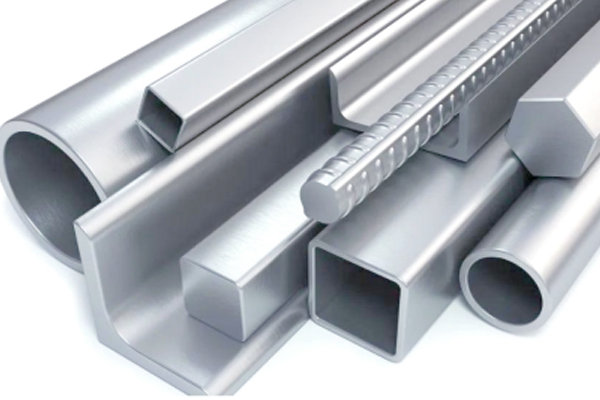
Aluminum alloys are non-ferrous metallic materials composed of an aluminum matrix with the addition of one or more alloying elements (such as copper, magnesium, zinc, silicon, etc.). They retain aluminum’s inherent advantages of lightweight and corrosion resistance while significantly enhancing strength, hardness, heat resistance, or workability through alloying. As one of the most widely used lightweight structural materials today, aluminum alloys are extensively applied in fields such as aerospace, rail transit, automotive, marine, construction, packaging, and 3C (Computer, Communication, and Consumer Electronics) products.
The metallographic challenges of aluminum and aluminum alloys vary depending on their purity. Higher-purity aluminum is softer, making it more susceptible to mechanical deformation and scratching. In high-purity aluminum, grinding can introduce deep deformation, and grinding or polishing abrasives (such as silicon carbide and diamond particles) can become embedded into the sample surface. Therefore, it is recommended to perform mechanical grinding followed by diamond polishing. For many pure aluminum and wrought alloy specimens, electrolytic polishing is also highly recommended.
Furthermore, aluminum alloys contain various intermetallic compound particles depending on their chemical composition; the preparation goal should be to retain these particles while minimizing relief. Using a synthetic, napless polishing cloth combined with a silica polishing suspension for the final polishing step results in much shallower relief compared to short-nap or medium-to-long-nap polishing cloths.
A standard 4-step polishing method can achieve simple and highly efficient sample preparation.
| Parameter | Step 1: Coarse Grinding DOCX | Step 2: Fine Grinding DOCX | Step 3: Coarse Polishing DOCX | Step 4: Fine Polishing DOCX |
| Surface/ Consumable | SiC Abrasive Paper | SiC Abrasive Paper | MOL Polishing Cloth | CHEM Polishing Cloth |
| Grit Size / Abrasive | P400 | P1200 | 3um Diamond Suspension | 0.05um Silica Polishing Suspension |
| Lubricant | Water | Water | Lubricant | / |
| Force (N) | 25 | 25 | 20 | 20 |
| Time (min) | 2 | 2 | 3 | 2 |
| Platen Speed (rpm) | 200 | 200 | 150 | 150 |
| Head Speed (rpm) | 60 | 60 | 60 | 60 |
| Rotation Direction | Co-rotation | Co-rotation | Counter-rotation | Counter-rotation |